

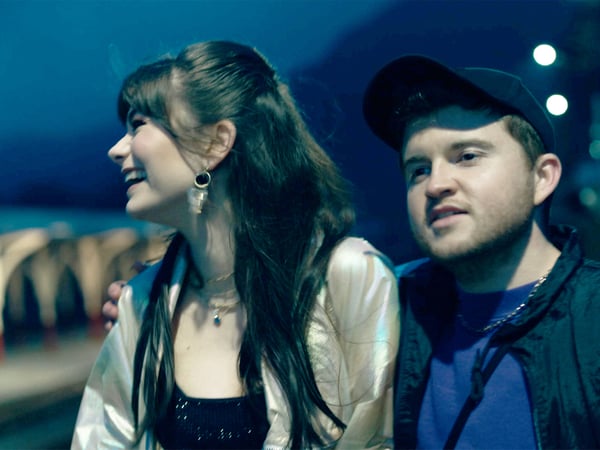
A rebellious young woman’s life is transformed by a chance encounter in North Wales in this moving adaptation of Gary Owen’s ‘Iphigenia in Splott‘.
Effi (Leisa Gwenllian) is living the “No sleep, bus, club, another club” TikTok life as much as she can while unemployed and drifting in her Welsh village. She gives attitude to a neighbour who slut-shames her and her nan begs her to find some dignity. Every tenner counts, however crumpled, to fuel this cycle of death by weekend drugs and booze and resurrection by Wednesday. Out on another shitty Llandudno club night, Effi saunters over to a handsome ex-soldier (Tom Rhys Harries) and their one-night stand changes her life.
Adapted from Gary Owen’s ‘Iphigenia in Splott’, a Welsh monologue from 2015 that was turned into a play in 2022, Effi o Blaenau is a film that has been brewing for a while. Inspired by the bad hand dealt to the original heroine, this story translates the tough choices made by young women into a modern context. From Greek to Welsh, a heavenly story is brought down to Earth and dropped in a mining town with a diminishing community, a location that is rarely put on screen in UK cinema.
There are hilarious moments that feel like glimpses of a Gen Z Fleabag, with English swearing entertainingly accentuated by the Welsh script, and Effi’s backing band of enablers – housemate Leanne (Nel Rhys Lewis) and boyfriend Kev (Owen Alun) – adding to the comedic elements of the first act. The film then becomes a vehicle to show the emotional depth and eloquence of this Messy Woman. What could have been a story about a working-class girl saved by motherhood, or a windfall, or a man, becomes more complex, and it takes swallowing her pride and finding solidarity with the women around her for Effi to find her saving grace.
Cinematically, the film doesn’t try to make the titular Blaenau Ffestiniog look less grey and depressing than it is, but it does mirror how Effi finds beauty in her home and spends time in it rather than trying to escape, from the stone building façades and the wild wind coming in from the sea, to the long valley roads she feels safe enough to hitchhike on. The framing also captures how Effi takes up space – loud and joyful or angry – versus when she surrenders to it, to nature and to others in sympathy, mimicking her journey of self-discovery through community. The style still feels pared back compared to the triumphs of, say, Kristen Stewart’s recent Chronology of Water or memorable scenes in Nora Fingscheidt’s memoir of an alcoholic, The Outrun, but serves the story and allows Gwenllian to shine.
There is no villain in the film, and even the most acerbic characters are just trying to get by. When Effi ends up in hospital, the debilitated state of the NHS plays a huge role in determining her fate. It is a chilling reminder of government cuts that have only got worse a decade after this story’s inception, and an important part of the film’s legacy. By the end, though Effi remains front and centre, the phrase “it takes a village” is actualised, and it’s hard not to endorse this stealthy socialist propaganda.
from Little White Lies - Main https://ift.tt/4x7Qe3w


0 Comments