

London’s silent cinema wave is only gathering pace, signalling an exciting new development through an unexpected departure to the past.
Silent cinema has long had a reputation of antiquity, seen by most of the 21st century film audience as outdated, irrelevant and culturally redundant. The narrative of film itself has always been driven by the advent of popular new technology. In 1927, The Jazz Singer took audiences by storm, shifting popular cinema into the era of talkies from the 1930s onwards. Left behind was the era of silent cinema, an outdated modem shaped by emphatic performances, decadent intertitles, and erratic physical comedians of vaudeville such as Buster Keaton and Harry Langdon. It’s a period of cinema history far often left to moulder away in attics and archives, rarely disrupted or challenged, and seen as the past-time of a purely older, nostalgic generation.
A new set of young programmers in London are reshaping how we experience silence and celluloid, combing through the pre-sound film catalogue to speak into this often buried period of history. At least three packed-out film clubs have emerged over the last year in London: Silent Picture Show a travelling programme, Films Are Gay! at East London’s Finch Community Cinema and SECT Silent Film Club at The Garden Cinema in Soho. Building audiences of primarily younger people, they are utilising lost, censored or unpopular silent film to rescore ideas of gender, sexuality and experimentation.
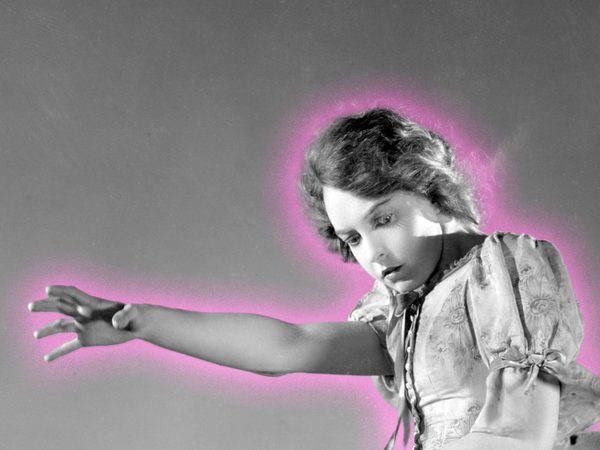
Programmer Ellen Cleary began Silent Picture Show in late 2025, inspired by her attendance of the Le Giornate del Cinema Muto, an all-silent festival in Pordenone, Italy. The festival’s programme resists rose-tinted nostalgias, engaging with modern-day criticisms and proactively working to welcome young people into silent film. Cleary rejects the notion that it’s space reserved for the old guard: “As if you need to be an early film historian or know everything there is to know about photo-chemical restoration or sprocket holes to appreciate it… That’s nonsense! The silent era is so exciting and varied,” she explains. It’s about the space to intervene with history. Her screening of The Wind (1928) at Finch Community Cinema focused on the impact of star Lillian Gish beyond the screen, pointing to the largely forgotten influence of women in shaping early film production, accompanied by pianist John Sweeney.
Similarly, Silent Picture Show’s screening of Erotikon at the Cinema Museum portrayed an early example of female pleasure, which was censored abruptly after only one initial public performance in 1929. Rules around censorship fluctuated massively during this period, and for Cleary, exploring these banned and disavowed works offers insight into a culture repressed by the conservative barometers of the past. Teasing out the artistry within these confined gems and connecting them to London’s repertory film appetite is her manifesto, blending the old and the new, and subverting the popular trends inciting local cinemaniacs. ‘Obsessed with ICA’s experimental film programming? Then come see this mind-blowing Swiss avant-garde movie from like a hundred years ago. Interested in queer feminist filmmaking? Then wait until you get to know Germaine Dulac’. This refusal of fashionable viewing and of the idea that younger audiences are the dictators of film culture, is refreshing.
Earlier this year, Silent Picture Show welcomed the senior crowd attending longstanding series Kennington Bioscope. Using a smart, tactile engagement with viewership, the hardcore silent cinema-goers of an older generation are united with a younger, curious audience, creating a legitimate sense of community across generations for Londoners. Back this coming September for an under-wraps 16mm presentation, Cleary in the meantime can be found sourcing inspiration for Silent Picture Show’s year ahead in the aisles of the city’s favourite avant-garde haunts.
Over at The Garden Cinema, SECT (Silence Enables Creative Transformation) Film Club, run by musician and programmer Raffaele Gabrielli, is similarly transposing silent form loudly for a present age. Developing an ongoing strand within the iconic art deco luxury of Soho’s favourite independent screen, Gabrielli selects 100-year-old flicks and renews them with live scores in his signature moody, electronic style. In fact, his recent presentation of pioneering animator Lotte Reinger’s The Adventures of Prince Achmed (1926) came shortly before a live score of the film at Bologna’s restoration festival Il Cinema Ritrovato this summer. Evidently, London’s silent scene is well ahead of the curve.
SECT also nods to the idea of a fraction of people who take their distance from the majority, and Gabrielli embraces this within the niche experimental component of early cinema: “Silent films carry the pure and original essence of visual storytelling. Often, these films are also trailblazers, as no rules had been written yet at that point,” he tells me. Reconditioning the screening space with his unusual sound, he invites the viewer to appreciate the eccentric, the odd and the previously unwelcomed. His audience is largely in their 20s and 30s, which he attributes to the decline of true art in modern box office cinema. Born in Italy, he finds nothing challenging about confronting audiences with dialogue intertitles. “More and more people are getting used to watching films in their original language. I come from a country where everything is dubbed anyway, and people grow up with it. There’s renewed interest for the old, or better even, for the original,” he continues. His next curation project takes him to Kolo community space in Paris, where he will be scoring a series of avant-garde shorts from the 1920s.
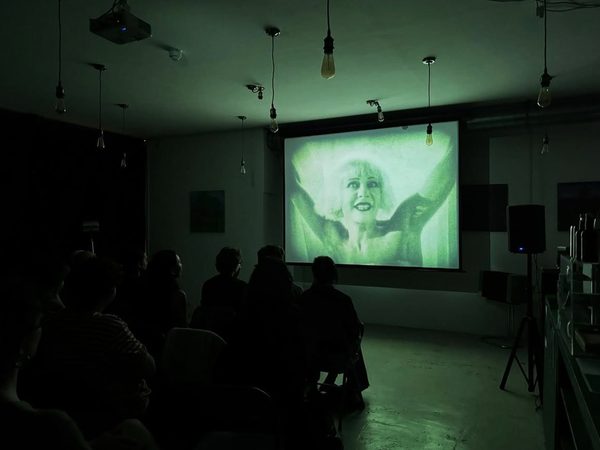
Community spaces seem to be overflowing with attendees for these screenings. I was blown away by programmer Erik Anderson Scott’s queer reassessment of Lot in Sodom (1933) and Salomé (1922) at Finch Community Cinema in Spring – packed with a Gen Z audience who seemed thrilled to be seeing what Anderson describes as a “biblically queer double bill”. His upbringing as a Mormon influences his interest in tradition broken by radically queer expression, and sees the material obsession with celluloid film as “folk revival’” – a pushback against AI slop by young people across UK arts culture. “There’s been a significant increase of interest in folk traditions, and an overwhelming gravitation to the handmade – pottery, knitting, weaving, embroidery. A large swathe of the younger Millennial and Gen Z populace outrightly reject AI – we are repulsed by the insistence that AI will be incorporated into the art we see,” he argues.
Anderson’s finetuned research approach for Films Are Gay! speaks loudly for an anachronistic queer presence across the film industry. What’s so thrilling about this series is discovering just how queer and inclusive so many early film productions were – taking a note from theatre by using performance to play with the imagination of sexuality and gender. Of course with this comes the prospect of undeniable camp – Films Are Gay! recently curated Italian romp ‘Filibus’ (1915) which Anderson summarises to me as “about a lesbian sky pirate who lives in a zeppelin, steals jewels with absurd sci-gadgets, and crossdresses as a man to seduce women. Now who wouldn’t want to see that?”. Silent cinema existed before the uniform censorship of the Hays Code, adopted from the 1930s to the end of the 60s, which gives these films a “wilder, freer quality,” and points to the expressive handmade quality of sets, costuming and title cards, inspiring movements of visual surreality such as pivotal German expressionist horror The Cabinet of Dr. Caligari (1920). Working away on the next delight, Films Are Gay! promises more thrilling revivals of analogue format, emphasizing that queer folk have always existed, both within and beyond the screen.
This kind of curation is not without its absences. Often silent film programmers encounter the most fascinating titles which simply do not exist anymore, due to a huge amount of early nitrate stock ossifying into dust, or being prone to burning up in the projection gate. Many rights holders for older silent films do not even own a screenable print of the work, and due to the paradox of the film archive, these fragile nitrate reels are often left on the shelf due to a “lack of interest” in titles which newer audiences are not even given a chance to see. Internet Archive and 240p Youtube videos of early cinema dominate the exhibition sector here, and what’s so fantastic about London’s silent programming scene is a real insistence on quality over vibes. There’s something comforting, but clearly wildly autonomous within these interventions – a whole chapter of cinema which has remained largely a mystery to a modern generation.
Things aren’t quieting down for silent cinema in London anytime soon. Kiln Theatre programmer Emmett Cruddas and photographer Sam Storey are working on a new initiative, Look For A While, at the Ivy House, featuring Samuel Beckett’s adaption FILM (1965), starring a late stage Buster Keaton, imaginatively rescored and paired with Japanese trick film Jiraiya the Hero (1921). It’s clear that the capital's emerging artists and film curators, working in a reduced funding climate, are attracted to spaces of silence for a possibility to speak. These film clubs are working with documents four times their age, sourcing, re-tinting, re-scoring and re-interpreting myths from another world to find a voice, and a solution for an anxious, unsure digital age.
from Little White Lies - Main https://ift.tt/U8OGLjx


0 Comments